
What hard water is, and why San Antonio has so much of it.
Hard water is water carrying dissolved calcium and magnesium. It picks them up underground, out of limestone — and San Antonio sits on the Edwards Aquifer, which is limestone. The water arrives hard before anyone treats it. SAWS reports San Antonio water at 15–20 grains per gallon.
Prefer email? jason.hartfelder@littleprofitwatersofteners.com or use the contact form.
How hard is 15 to 20 grains?
Hardness is measured in grains per gallon. The scale below is the standard one the water industry uses. The figure for San Antonio is SAWS’s own, and it puts the city at the top of it.
What it is actually doing to your house
None of this happens overnight. That is why hard water is easy to live with and expensive to ignore.
White crust on shower heads and aerators, spots on glassware that come back after drying. That is the calcium coming out of solution as the water evaporates.
Hardness minerals bind up soap before it can foam. You end up using more detergent and still getting a film on skin, hair and laundry.
Scale settles inside the tank and on the element, where it insulates. The heater burns more to deliver the same hot water, and it does it for years before anyone notices.
Dishwashers, ice makers and tankless heaters all move water through narrow passages. Scale is what eventually closes those up.
Hard water is a nuisance, not a health problem.
Calcium and magnesium are minerals, not contaminants, and city water from SAWS is treated to state and federal drinking water standards before it gets to your house. Hardness costs you soap, scale and appliance life. It is not a safety issue, and anyone telling you your tap water is dangerous in order to sell you equipment is selling you something. We would rather explain what a softener will and will not change.
What actually fixes it
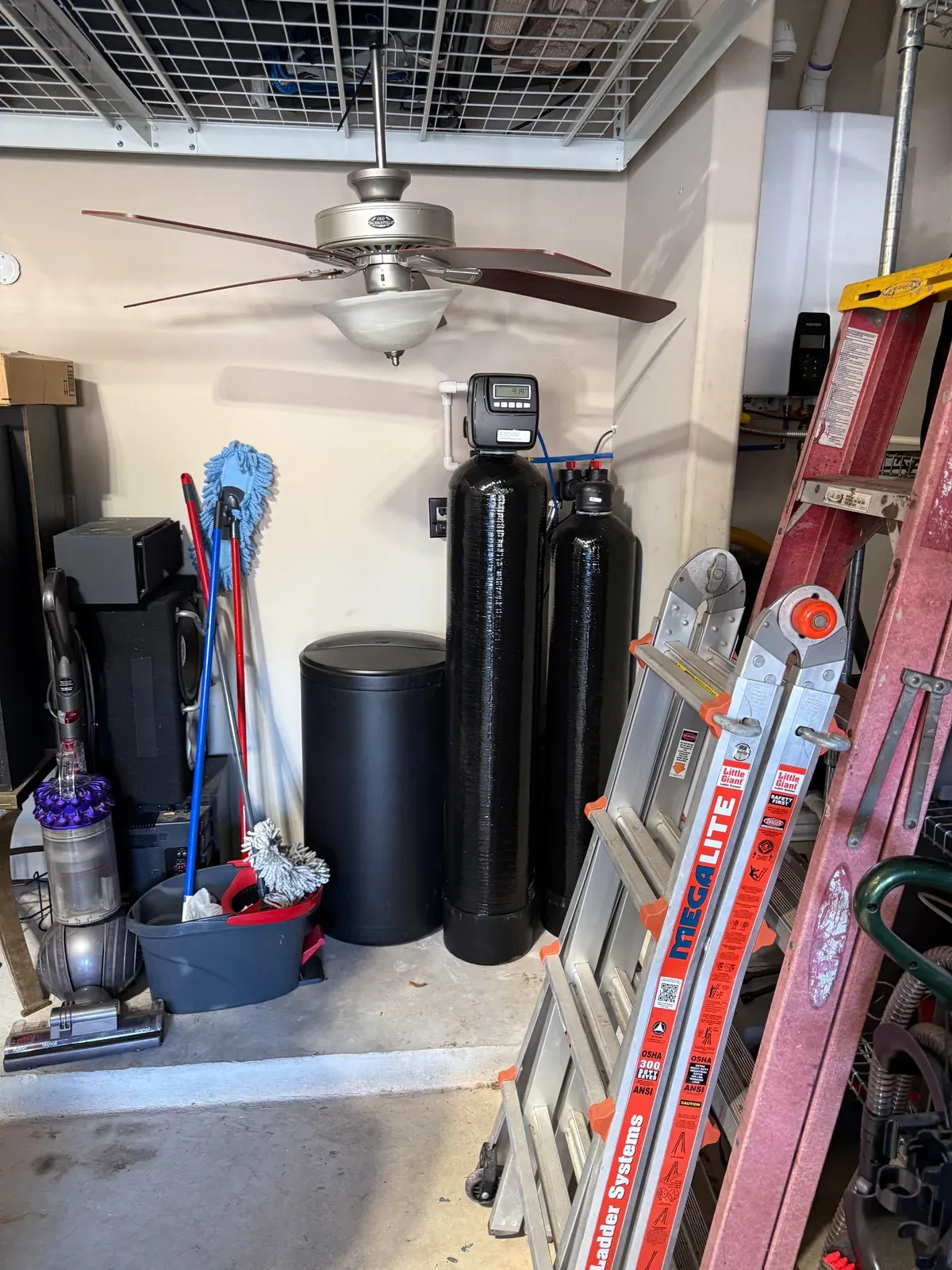
A water softener, and the mechanism is simpler than it sounds. The tank is full of resin beads that hold sodium. Hard water runs through them, the beads trade their sodium for the calcium and magnesium, and what comes out the other side is soft. When the resin fills up, the unit rinses itself with brine from the salt tank and starts over. That is the whole trick — there is no filter to change.
We install 10% cross-link resin and Clack valves only — one grade, one valve, no tiers. $2,100–$4,000 installed, pre-plumbed, softener only. Higher only for bringing things up to code, distance, or special circumstances. Sizingcomes down to two things: how hard your water is, and how many people use it.
Hill Country wells are usually hard on top of iron or sulfur, and those get handled ahead of the softener. Different job, different order.
Well water & iron removalIf the scale and the soap problems came back, the unit has probably stopped regenerating. That is a repair call, not a new softener.
Water softener repairCity water, a co-op, or a well — it changes the answer. Your town page says which utility serves it and what we usually find there.
Find your townCommon questions
Is hard water bad for you?
No. Calcium and magnesium are minerals, not contaminants, and city water from SAWS is treated to state and federal drinking water standards before it reaches you. Hardness is a cost and nuisance problem — scale, soap, appliance life — not a health one.
How do I know I have hard water without a test?
White crust on the shower head and faucet aerators, spots on glassware that come back after drying, soap that will not lather, and a film on your skin after a shower. If you are on San Antonio city water, you almost certainly have it. We test for hardness, iron and chlorine free before quoting anything.
Will softened water taste salty?
No. Ion exchange swaps hardness minerals for a very small amount of sodium — far below what you would taste. The salt in the brine tank rinses the resin; it does not end up in your glass in any quantity you would notice.
Do I need a softener, or is this optional?
It is a choice, not a requirement. Plenty of San Antonio homes run on hard water for years. What a softener buys you is less scale, less soap, and longer life out of the water heater and dishwasher. We will tell you honestly what we would expect it to change in your house.
How long does a water softener last?
A properly sized unit on city water runs well past a decade. Ours carry 5 years on the valve, 10 years on the tank, and 1 year of free service checkup. What kills softeners early is being undersized, or being sold for an iron problem it was never going to handle.
Does a water softener remove chlorine taste?
No — those are two different jobs. A softener handles hardness. Chlorine taste and smell are handled by a whole house catalytic carbon filter, which is separate equipment that sits alongside the softener.
Find out what your water actually is.
We test hardness, iron and chlorine free of charge before we size anything. Call or text and describe the house — how many people, how many baths — and we will quote it over the phone.
Prefer email? jason.hartfelder@littleprofitwatersofteners.com or use the contact form.